Power and influence
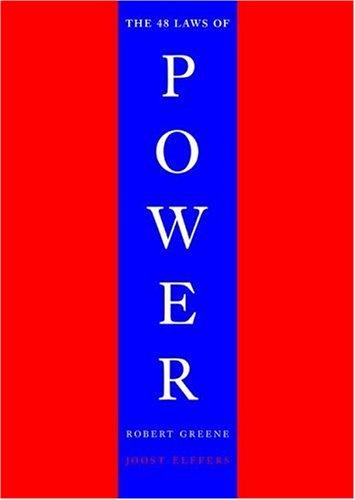
The 48 Laws of Power
Robert Greene
I read it to recognize the games, not to play them. Public, checkable work is the best defense against politics.
Overview
My interpretation
Why it's on my shelf
I don’t keep this book because I agree with it. I keep it because I lead inside large organizations, and the leaders who get blindsided by politics are the ones who refuse to understand it. It is a map of the moves people make, so I can recognize them without making them.
Book's argument
What this book is about
Greene distills episodes from history into 48 maxims about how power is gained, held and lost. He argues that power games are unavoidable in any group, and that understanding them is a form of self-protection.
Book's argument
A few representative laws, described, not prescribed
- 1Law 1: Never outshine the masterGreene claims superiors punish people who make them feel insecure.
- 2Law 3: Conceal your intentionsHe argues that revealing goals gives others the means to block them.
- 3Law 4: Always say less than necessarySaying less, he says, makes you seem more powerful and gives less away.
- 4Law 5: Guard your reputationReputation is presented as the foundation of power.
- 5Law 48: Assume formlessnessAdaptability, rather than a fixed position, keeps power durable.
Context
Context
This book is on the shelf as a map of how power is played, not as a guide to follow. Many of its tactics are manipulative, and none of them are endorsed here. The ideas below describe the book’s claims, each with an ethical caveat.
Key Ideas
Key ideas
Book's argument
01Never outshine the master
Greene argues that making superiors feel insecure about their position invites resentment, so ambitious people should let those above them appear to shine.
Caveat As advice it rewards insecurity; healthy organizations should want people who outshine their leaders, and good leaders should notice when someone is hiding their abilities.
Book's argument
02Conceal your intentions
The book claims that people who reveal their goals give others the means to block them.
Caveat Hidden agendas destroy trust once discovered; transparent leadership trades short-term advantage for long-term credibility.
Book's argument
03Guard your reputation
Reputation is presented as the foundation of power, worth defending carefully and, in Greene’s telling, attacking in rivals.
Caveat Protecting your own credibility is reasonable; undermining others’ reputations is not.
Book's argument
04Assume formlessness
The final law argues that adaptability, rather than a fixed position, keeps power durable.
Caveat Adaptability is a genuine strength; as Greene frames it, it can also become a lack of principles.
My Notes
My application
How I apply it
- I use it defensively: when a project stalls for reasons nobody will say, I ask which of these games might be in play.
- I take the reputation law seriously in its ethical form: keep promises, write decisions down, and let the work be checkable. Public, measurable work is the best defense against politics.
- I do the opposite of “conceal your intentions”: my operating model is public on purpose. Transparency is a strategy, not naivety.
- I talk about these patterns with emerging leaders so they can name them, not so they can use them.
My interpretation
Where I agree
It is right that power dynamics exist in every group and that pretending otherwise is dangerous. Some laws, read ethically, are just good sense: guard your reputation, adapt rather than ossify.
My critique
Where I push back
Most of it is manipulation presented as wisdom. Its evidence is cherry-picked history (courtiers, con artists, generals), it ignores the long-run cost of being untrustworthy, and its world is zero-sum, which healthy teams are not. Followed literally, it produces exactly the low-trust, high-politics culture the other books on this shelf are trying to cure.
My interpretation
My reflections
Know the games, don’t play them
Politics exists in every large organization, and leaders who refuse to see it get blindsided. My answer isn’t to play the games better; it’s to make my work public, measurable and easy to check.
Takeaways
My interpretation
Takeaways
- Understand politics so you aren’t naive, not so you can play dirty.
- Transparency and checkable work are the best defense.
- Reputation is built by keeping promises, not managing perception.
- The tactics win short games and lose long ones.
My application
Questions for your team
- Is there a decision on this team that everyone knows about but nobody says out loud?
- Who benefits from a project staying unclear?
- Is credit given where the work was done?
- What would a newcomer misread about how decisions really get made here?
- Are we rewarding visibility or results?
My interpretation
Read it with
Read it right after Radical Candor. Scott describes the leadership you want; Greene describes the manipulation you’ll meet. Then reread The Five Dysfunctions to see what these tactics do to a team.
My critique
Who should skip it
Skip it if you’re new to leadership and still forming your instincts; read the books that build trust first. It misleads anyone who reads it as a manual.
Related Books
Related books
- Power and influenceRadical CandorKim Scott
My critique
These two argue with each other. Greene maps manipulative insincerity in detail; Scott names it the worst quadrant. I read Greene to recognize the moves and Scott to know what to do instead.
- Power and influenceThe Five Dysfunctions of a TeamPatrick Lencioni
My critique
Greene’s tactics are a recipe for Lencioni’s base dysfunction. Concealing intentions and guarding position destroy the trust everything else is built on.
Read, borrow or buy
- Publisher page Penguin Random House (Viking) · print · buy · link checked Oct 22, 2026
Drafted with AI assistance from the book and its published material, edited and published by me. Nothing here quotes the book at length; get the book itself for the real thing. Cover image: Open Library. Ads & privacy.