Engineering excellenceTeam culture
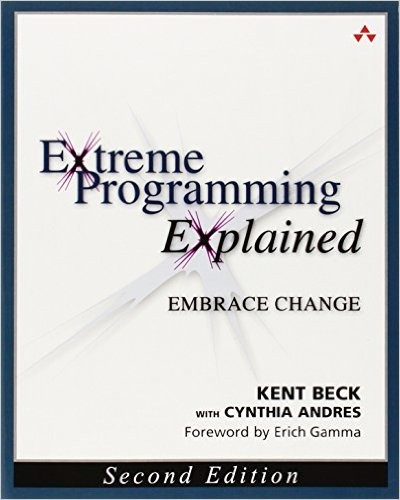
Extreme Programming Explained
Embrace Change
Kent Beck and Cynthia Andres
Tests are the contract, CI is the gate, short loops are the culture. It turns out that’s how you run agents too.
Overview
My interpretation
Why it's on my shelf
XP is where most of what I believe about shipping software comes from: short loops, tests first, continuous integration, sustainable pace. It is also, unexpectedly, the best book I know on running AI agents.
Book's argument
What this book is about
Software can respond to change cheaply when a team works in short cycles, gets continuous feedback and keeps its technical discipline high. The second edition frames Extreme Programming as values (communication, simplicity, feedback, courage and respect), principles that connect them to daily work, and practices a team adopts incrementally.
Book's argument
The five values
- 1CommunicationMost problems trace back to someone not knowing something; make knowledge flow.
- 2SimplicityBuild the simplest thing that could work today, and change it tomorrow.
- 3FeedbackShorten the loop between a decision and learning whether it was right.
- 4CourageAct on what you know: delete code, raise problems, change direction.
- 5RespectEveryone on the team matters, and the work only works if they care.
Context
Context
The first edition (1999, Kent Beck) introduced XP as a fixed set of practices. The second edition (2004, Kent Beck with Cynthia Andres) was substantially rewritten around values, principles, and primary and corollary practices adopted gradually. This summary follows the second edition.
Key Ideas
Key ideas
Book's argument
01Values, principles, practices
Practices only make sense when tied to values through principles; copying practices without the values tends to fail.
Caveat The framing is abstract, and teams sometimes adopt the vocabulary without changing behaviour.
Book's argument
02Shorten every feedback loop
Weekly and quarterly cycles, continuous integration and a fast build keep the gap between a decision and its consequences small.
Caveat Some domains, such as hardware or regulated releases, limit how short certain loops can be.
On a team A team whose build takes an hour will integrate less often and find conflicts later.
Book's argument
03Test first, design incrementally
Writing tests before code and improving the design a little every day keeps the cost of change low over time.
Caveat Test-first takes practice, and incremental design still needs someone thinking about the larger architecture.
Book's argument
04Pairing and sitting together
Pair programming and a team that works side by side spread knowledge, catch mistakes early and keep communication high.
Caveat Pairing all day is tiring and does not suit every person or task; remote teams need other ways to stay close.
Book's argument
05Energized work
Sustainable hours produce better software than exhaustion, so a team should work only as many hours as it can stay productive.
Caveat Teams under real external pressure can find this hard to defend without leadership support.
My Notes
My application
How I apply it
- “CI lands the work” is rule two of my agent operating model, and it is straight XP: nothing merges unless the tests are green, and every merge deploys.
- I treat test-first as non-negotiable for agents. A failing test is the clearest possible contract for a model to satisfy.
- I keep release cycles short. Weekly releases make each change smaller, safer and easier to review.
- I use the values as a review checklist: if a process doesn’t serve communication, simplicity, feedback, courage or respect, it’s ceremony.
My interpretation
Where I agree
Its bet on feedback has aged better than anything else in the agile canon: CI/CD, trunk-based development and test-first all descend from it. The second edition’s shift from rigid rules to values and principles was the right correction.
My critique
Where I push back
Some practices are contested: full-time pair programming exhausts many people and doesn’t fit distributed teams well, and the book’s evidence is mostly experience, not data. The second edition is also looser than the first, which makes it easier to claim you “do XP” while skipping the hard parts.
My interpretation
My reflections
CI lands the work, not the agent
Every change in my fleet merges only when the checks are green, and every merge deploys. It’s Kent Beck’s feedback loop with a new kind of teammate. Tests are the clearest contract you can give a model.
Takeaways
My interpretation
Takeaways
- Shorten every feedback loop.
- Practices without values become cargo cults.
- Tests are the contract; write them first.
- Sustainable pace is a quality practice.
My application
Questions for your team
- How long from a merged change to a user seeing it?
- What percentage of our changes land with a test written first?
- When the build breaks, how long until someone fixes it, and is that someone obvious?
- Which process do we follow that no longer serves any of the five values?
- Is our pace sustainable, or are we borrowing from next quarter?
My interpretation
Read it with
Read it with Peopleware: XP’s technical discipline only works on the human foundation Peopleware describes.
My critique
Who should skip it
Skip the first edition unless you’re interested in history. And be careful applying it to teams with no automated test culture yet; start with CI and tests before pairing and story cards.
Related Books
Related books
- Team culturePeoplewareTom DeMarco and Timothy Lister
My interpretation
XP’s discipline only holds on Peopleware’s foundation. Sustainable pace and protected focus aren’t perks; they’re what keeps tests written and builds green.
- Engineering excellenceDriveDaniel H. Pink
My interpretation
Autonomy works on a leash, and XP is the leash: tests and CI define the boundary, and inside it engineers (and agents) get real freedom to change the code.
- Engineering excellenceAccelerateNicole Forsgren, Jez Humble and Gene Kim
My interpretation
XP described the practices: small releases, tests first, continuous integration. Accelerate brought the evidence that they pay off at scale. I read Beck for the how and Forsgren for the proof.
- Engineering excellenceClean CodeRobert C. Martin
My interpretation
Clean Code is the craft inside XP’s practices. Refactoring, simple design and tests only work if the code is readable enough to change safely.
Read, borrow or buy
- Publisher page Addison-Wesley (InformIT) · print · buy · link checked Oct 22, 2026
Drafted with AI assistance from the book and its published material, edited and published by me. Nothing here quotes the book at length; get the book itself for the real thing. Cover image: Open Library. Ads & privacy.