Management craftFeedback and coaching
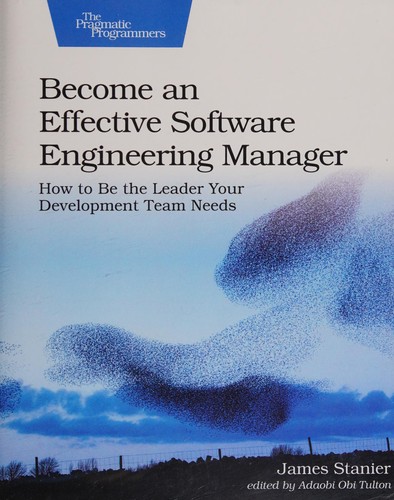
Become an Effective Software Engineering Manager
How to Be the Leader Your Development Team Needs
James Stanier
Your output is the team’s output. Design your week so the work only you can do gets done.
Overview
My interpretation
Why it's on my shelf
This is the book I would hand a strong engineer on their first day as a manager. It treats management as a separate craft with its own habits, which is the thing most new managers get wrong, and it is practical enough to use on Monday.
Book's argument
What this book is about
Engineering management is a different job from engineering, not a promotion of it. The manager’s work is to create the conditions in which the team does its best work, and that comes from deliberate, repeatable habits: managing your own time, holding regular one-to-ones, giving feedback, delegating, and hiring well.
Book's argument
The manager’s core toolkit
- 1Your own timeA manager’s calendar fills by default, so attention and a task system have to be designed on purpose.
- 2One-to-onesRegular private conversations are where trust, feedback and career growth actually happen.
- 3DelegationHanding over stretching work, with clear expectations, is how people grow and how the manager scales.
- 4FeedbackTimely, specific feedback in both directions keeps small problems small.
- 5HiringA structured, consistent process, because who joins shapes the team for years.
Key Ideas
Key ideas
Book's argument
01Your output is the team’s output
Once you manage, your contribution is measured by what the team achieves, not by what you produce yourself.
Caveat The feedback loop is slow; new managers often feel unproductive for months and are tempted to retreat into coding.
On a team A new manager who keeps taking the hardest tickets can become the team’s bottleneck instead of its multiplier.
Book's argument
02Manage yourself first
A manager’s calendar fills up by default, so time, attention and a reliable system for tasks have to be managed on purpose.
Caveat The right system is personal; the point is having one, not copying a particular tool.
Book's argument
03One-to-ones are the core habit
Regular, private conversations with each report are where trust, feedback and career growth happen.
Caveat They decay into status updates unless the report owns much of the agenda.
Book's argument
04Delegate to grow people
Delegation is a development tool: hand over work that stretches someone, with clear expectations and support.
Caveat Handing off work without context or backing is abdication, not delegation.
Book's argument
05Hiring is high leverage
Who joins the team shapes it for years, so hiring deserves a structured, consistent process.
Caveat Structure reduces bias and noise but does not remove them.
My Notes
My application
How I apply it
- I run one-to-ones as the report’s meeting, not mine: their agenda first, status last, because status belongs in a written update.
- I protect a weekly block for the work only a manager can do: hiring, unblocking, writing down decisions. Everything else can be interrupted.
- With the agent fleet I apply the same idea of delegation: a clear contract in AGENTS.md, a definition of done, and a check that verifies the work instead of me watching it happen.
- When I hand someone a stretch project, I say out loud what “done” looks like and when we will check in. Silence is not delegation.
My interpretation
Where I agree
Its core claim, that your output is now the team’s output, is the most important mindset shift in the job. I also agree with its emphasis on systems over heroics: a calendar, a task list and a hiring rubric beat good intentions every time.
My critique
Where I push back
It is written for managers of one team in a fairly healthy company. It says less about politics, reorgs, layoffs or leading through a crisis, and a manager in a struggling organization will find its advice assumes more support than they have. Parts of it are also familiar if you have already read The Manager’s Path.
My interpretation
My reflections
Design the week, or it designs you
A manager’s calendar fills itself with other people’s priorities. Protecting time for hiring, unblocking and writing down decisions is the most leveraged thing I do each week.
Takeaways
My interpretation
Takeaways
- Management is a different job, not a promotion.
- Design your week, or other people will design it for you.
- One-to-ones are the core habit; protect them.
- Delegation is a development tool, not just a way to offload work.
My application
Questions for your team
- If I disappeared for two weeks, which decisions would stall, and why are they still mine?
- Does every person on the team know what is expected of them this quarter, in writing?
- When did each person last get specific feedback, positive or negative?
- Are one-to-ones being cancelled more often than they are held?
- Is our hiring loop the same for every candidate, or does it depend on who is free?
My interpretation
Read it with
Read it with The Manager’s Path. Stanier teaches the daily craft of running one team; Fournier shows how that craft changes at every level above it.
My critique
Who should skip it
Skip it if you have managed managers for years; it will mostly confirm what you know. It also misleads if you treat it as complete: it is a starter kit, not a guide to organizational politics.
Related Books
Related books
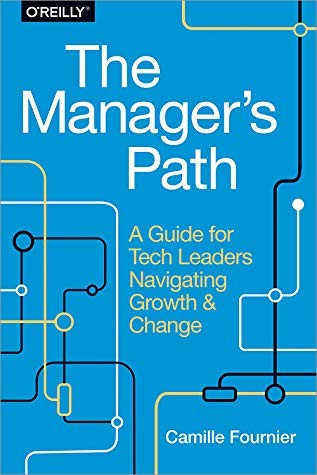
- Management craftThe Manager’s PathCamille Fournier
My interpretation
Stanier is the daily craft of running one team; Fournier is how that craft has to change on every rung above it. Start with Stanier, then keep Fournier for each promotion.
Read, borrow or buy
- Publisher page The Pragmatic Bookshelf · print · buy · link checked Oct 22, 2026
Drafted with AI assistance from the book and its published material, edited and published by me. Nothing here quotes the book at length; get the book itself for the real thing. Cover image: Open Library. Ads & privacy.